
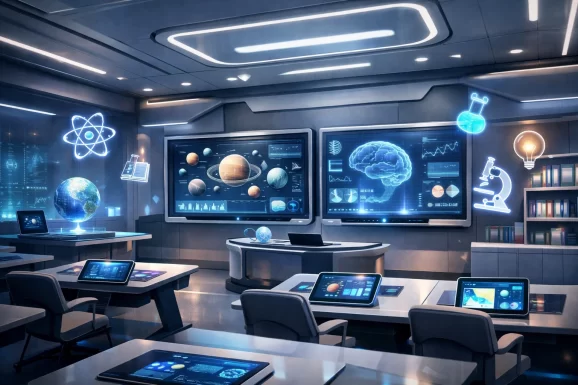
GNWS Smart Classroom Learning represents a powerful shift in how education is delivered at GNWS, formally known as Greater Noida World School. From the very first lesson, technology-driven classrooms are designed to make learning interactive, meaningful, and future-ready. Through digital tools, collaborative activities, and structured engagement, students experience holistic education that blends experiential learning with moral education in schools and value education in schools, ensuring balanced academic and personal growth.

In this deep dive, the focus remains strictly on how GNWS’s smart classrooms function as a complete ecosystem for technology-driven learning and how this approach shapes students academically, emotionally, and ethically.
Understanding Smart Classrooms at GNWS
Smart classrooms at GNWS have been designed as dynamic learning environments where technology supports teaching without overpowering human connection. Digital boards, interactive panels, multimedia content, and real-time assessments are seamlessly integrated into everyday lessons.
More importantly, learning is not treated as a passive activity. Instead, students are encouraged to participate, question, explore, and reflect. Through this approach, holistic education is naturally promoted because intellectual, emotional, social, and ethical growth is addressed together rather than in isolation.
How Technology Enhances Concept Clarity
One of the biggest advantages of GNWS smart classrooms is improved conceptual understanding. Abstract topics in science, mathematics, and social studies are visualized through animations, simulations, and real-life examples. As a result, lessons are better retained and applied.
For instance, complex scientific processes can be demonstrated visually, while historical events can be explored through timelines and interactive maps. Consequently, experiential learning is strengthened, as students learn by seeing, doing, and reflecting rather than memorizing information.
Experiential Learning in Everyday Lessons
Experiential learning lies at the heart of GNWS’s technology-driven classrooms. Learning activities are designed so that students actively engage with content instead of passively receiving it.
Group discussions, virtual experiments, digital storytelling, and project-based tasks are frequently used. Through such practices, curiosity is nurtured and creativity is enhanced. Moreover, learning becomes meaningful because students can connect lessons with real-world situations.
As a result, classrooms transform into spaces where ideas are explored collaboratively, and knowledge is constructed through experience.
Supporting Holistic Education Through Smart Classrooms
Holistic education focuses on developing the whole child rather than academic performance alone. GNWS smart classrooms strongly support this philosophy. Academic learning is balanced with emotional awareness, critical thinking, collaboration, and ethical understanding.
Technology is used as a tool to encourage teamwork, communication, and problem-solving. Interactive activities promote peer learning, while reflective exercises help students understand their strengths and areas of improvement. Thus, learning extends beyond grades and examinations.
Moral Education in Schools Through Digital Integration
A common misconception is that technology distances students from values. At GNWS, the opposite approach is followed. Moral education in schools is thoughtfully integrated into smart classroom content.
Short films, digital stories, real-life case studies, and discussion-based modules are used to introduce topics such as honesty, empathy, respect, and responsibility. These values are not imposed; instead, they are explored through dialogue and reflection.
As a result, students are encouraged to think ethically, understand consequences, and make informed moral choices.
Value Education in Schools as a Living Practice
Value education in schools at GNWS is not treated as a separate subject taught once a week. Instead, it is embedded across lessons and activities. Smart classrooms make this integration seamless.
For example, collaborative projects promote respect for diverse opinions, while digital citizenship lessons teach responsible online behavior. Furthermore, classroom discussions often revolve around real-world issues, helping students develop compassion and social awareness.
Through such consistent reinforcement, values become a lived experience rather than abstract ideas.
Personalized Learning Through Smart Technology
Every learner is unique, and GNWS smart classrooms recognize this diversity. Technology allows lessons to be adapted according to different learning styles and paces. Visual learners, auditory learners, and kinesthetic learners all benefit from varied digital resources.
Additionally, real-time assessments help teachers understand student progress more effectively. Feedback is provided promptly, and support is offered where needed. Consequently, learning gaps are identified early, and confidence is built gradually.
Teacher Empowerment in Smart Classrooms
While technology plays a crucial role, teachers remain at the center of the learning process. At GNWS, educators are trained to use smart classroom tools effectively. Rather than replacing teachers, technology enhances their ability to explain concepts, track progress, and engage students.
Lessons are carefully planned so that digital tools complement teaching objectives. As a result, classrooms remain structured yet flexible, and learning remains purposeful.
Encouraging Collaboration and Communication
Smart classrooms at GNWS strongly promote collaborative learning. Group activities, digital brainstorming sessions, and interactive quizzes encourage students to communicate their ideas confidently.
Through such practices, teamwork and leadership skills are developed naturally. Students learn how to listen actively, express viewpoints respectfully, and work towards shared goals. These skills are essential for both academic success and life beyond school.
Preparing Students for a Digital Future
In today’s rapidly evolving world, digital literacy is essential. GNWS smart classrooms prepare students to use technology responsibly and confidently. Research skills, presentation abilities, and online etiquette are emphasized from an early age.
At the same time, students are taught to balance screen time with critical thinking and creativity. Thus, technology becomes an enabler rather than a distraction.
Emotional Well-Being and Student Engagement
Technology-driven learning at GNWS also supports emotional well-being. Interactive lessons reduce stress associated with rote learning, while engaging activities increase motivation and confidence.
Moreover, classroom discussions often include reflection and self-expression. Students are encouraged to share thoughts and emotions, creating a supportive and inclusive environment. Consequently, learning becomes joyful and meaningful.
Assessment Beyond Exams
Assessment in GNWS smart classrooms goes beyond traditional tests. Projects, presentations, quizzes, and peer feedback are used to evaluate understanding comprehensively.

Such diverse assessment methods align with experiential learning principles. Students are assessed on application, creativity, and critical thinking rather than memorization alone. This approach builds confidence and reduces exam anxiety.
Creating a Culture of Lifelong Learning
Smart classrooms at GNWS foster curiosity and a love for learning. Students are encouraged to ask questions, explore independently, and take ownership of their education.
Because learning is interactive and relevant, students develop intrinsic motivation. Over time, this mindset supports lifelong learning, adaptability, and resilience.
Why GNWS’s Smart Classrooms Stand Out
What truly distinguishes GNWS smart classrooms is their balanced approach. Technology is used thoughtfully to support holistic education, strengthen moral education in schools, and embed value education in schools within everyday learning.
Rather than focusing solely on academic excellence, GNWS emphasizes character development, creativity, and real-world readiness. As a result, students grow into confident, compassionate, and capable individuals.
Conclusion
GNWS’s smart classrooms represent more than a technological upgrade; they reflect a progressive educational philosophy. Through interactive tools, experiential learning methods, and value-driven practices, education is transformed into a meaningful journey.
By integrating technology with ethics, collaboration, and creativity, GNWS ensures that learning remains human-centered. Ultimately, students are not only prepared for examinations but also equipped for life.
Frequently Asked Questions (FAQs)
1. How do smart classrooms support holistic education at GNWS?
Smart classrooms address academic, emotional, social, and ethical development together, ensuring balanced growth through interactive and reflective learning.
2. In what ways is experiential learning encouraged in GNWS classrooms?
Experiential learning is promoted through projects, simulations, group activities, and real-life applications that help students learn by doing.
3. How is moral education in schools integrated into smart classrooms?
Moral education is delivered through digital stories, discussions, and real-life case studies that encourage ethical thinking and empathy.
4. Why is value education in schools important in a technology-driven setup?
Value education ensures that students use technology responsibly while developing respect, compassion, and social awareness alongside digital skills.