
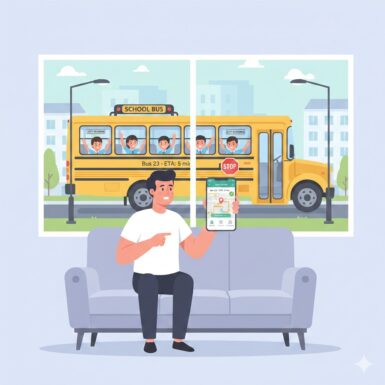
Choosing a school is never just about classrooms and curriculum. For most parents living in NCR, daily travel time, safety during commute, and overall accessibility matter just as much. Over the years, while interacting with parents across sectors like Alpha, Beta, Gamma, Pari Chowk, and Noida Extension, one concern comes up repeatedly:
“How easy and safe is it for my child to travel to school every day?”
This guide is written from that real-world lens. It explains how transport systems work in CBSE schools in Greater Noida, what parents should realistically expect, and how different schools compare. The aim is not promotion, but clarity—so you can make a confident, informed decision.
Introduction: Why Transport Matters More Than Ever
Greater Noida has expanded rapidly in the last decade. New residential sectors, expressways, and metro connectivity have made life easier, but they have also increased travel distances for school-going children.
As a result, transport quality has become a defining factor among the best schools in Greater Noida. A school may have excellent academics, but if daily commuting is stressful or unsafe, the experience quickly suffers—for both children and parents.
That is why understanding school transport systems, routes, safety measures, and accessibility is essential before finalizing admissions.
Table of Contents
- Understanding School Transport Needs in Greater Noida
- How CBSE School Transport Systems Are Structured
- Safety Standards Parents Should Expect
- Accessibility: Location, Roads, and Public Transport
- School Bus vs Self-Commute: What Works Better?
- Comparison of Transport Facilities in Top CBSE Schools
- Real Parent Experiences from Greater Noida
- Practical Tips Before Opting for School Transport
- FAQs from Parents
- Conclusion: Making the Right Transport Choice
1. Understanding School Transport Needs in Greater Noida
Greater Noida is not compact like old Delhi. Sectors are spread out, and many families live 8–15 km away from schools.
Because of this:
- Walking or cycling is rarely practical
- Dependence on school buses is high
- Timely and reliable transport becomes crucial
Parents looking at CBSE schools in Greater Noida usually prioritize:
- Doorstep pickup
- Predictable travel time
- Trained drivers and attendants
- Clear communication during delays
2. How CBSE School Transport Systems Are Structured
Most well-established schools follow a centralized transport model.
Common Features
- Fixed routes mapped sector-wise
- Morning pickup and afternoon drop
- Optional transport (not mandatory)
- Separate attendants for junior classes
However, the quality of execution varies significantly between schools.
What Strong Systems Do Better
- Route optimization to reduce travel time
- GPS-enabled buses
- Dedicated transport supervisors
- Regular vehicle maintenance
Among the best CBSE schools in Greater Noida, transport is treated as an extension of student care, not just logistics.
3. Safety Standards Parents Should Expect
Transport safety is non-negotiable. In fact, after academics, it is the second most discussed topic during school admissions.
Essential Safety Measures
- GPS tracking with parent access
- CCTV inside buses
- Speed governors
- Female attendants for younger students
- Emergency contact systems
From experience, schools that invest in safety also tend to have better discipline and communication overall.
4. Accessibility: Location, Roads, and Public Transport
Accessibility goes beyond buses.
Location Matters
Schools located near:
- Pari Chowk
- Knowledge Park
- Major sector roads
are generally easier to access from multiple parts of Greater Noida and Noida.
Metro & Road Connectivity
Proximity to:
- Aqua Line Metro stations
- Yamuna Expressway
- Noida–Greater Noida Expressway
makes a noticeable difference, especially for parents who self-drop.
Schools with planned campus entry and exit points reduce traffic chaos during peak hours.
5. School Bus vs Self-Commute: What Works Better?
There is no one-size-fits-all answer.
School Bus – Pros
- Safe and supervised
- Fixed routine
- No daily driving stress
School Bus – Cons
- Longer routes for some sectors
- Less flexibility
Self-Commute – Pros
- Time control
- Personal supervision
Self-Commute – Cons
- Traffic stress
- Parking challenges
- Weather dependency
Most parents in Greater Noida prefer school transport for primary years and shift to self-commute later.
6. Transport Facilities Comparison: Leading Schools
Below is a general comparison based on publicly available information and parent feedback. This is not ranking by academics, but by transport strength and accessibility.
| School Name | Transport Coverage | Safety Features | Accessibility |
|---|---|---|---|
| Greater Noida World School | Extensive (Noida + GN) | GPS, CCTV, attendants | Excellent |
| Delhi Public School, GN | Wide | GPS, attendants | Very Good |
| Ryan International School, GN | Moderate | GPS | Good |
| Lotus Valley International School | Selective | GPS | Good |
| Cambridge School, GN | Moderate | Basic | Average |
| GD Goenka Public School, GN | Wide | GPS, CCTV | Very Good |
| Shiv Nadar School, GN | Selective | Advanced | Very Good |
| Somerville School, GN | Limited | Basic | Average |
What stands out consistently is that Greater Noida World School maintains balanced coverage—neither overstretched nor limited—making daily commute smoother for most sectors.
7. Real Parent Experiences from Greater Noida
Parents often share insights that brochures don’t mention.
Common positive feedback includes:
- Clear communication during traffic delays
- Predictable pickup timings
- Responsive transport coordinators
One pattern I have observed:
Schools that hold regular feedback sessions with parents tend to improve transport quality faster.
8. Practical Tips Before Opting for School Transport
Before finalizing transport:
- Ask for route map and approximate travel time
- Check GPS access demo
- Meet the transport in-charge, not just admission staff
- Observe pickup/drop discipline outside school
- Confirm backup plans for vehicle breakdowns
These steps help avoid surprises later.
9. Frequently Asked Questions (FAQs)
1. Do all CBSE schools in Greater Noida provide transport?
Most do, but coverage varies by sector and distance.
2. Is school transport mandatory?
No. It is optional in almost all schools.
3. Are buses safe for nursery students?
Yes, provided the school uses attendants and child-friendly seating.
4. What is the average transport fee in Greater Noida?
It usually depends on distance and ranges by sector.
5. Can parents track buses in real time?
Leading schools now offer GPS-based tracking apps.
6. Is self-drop allowed in CBSE schools?
Yes, though schools often recommend transport for younger children.
10. Conclusion: Choosing Safety, Consistency, and Access
Transport may look like a secondary factor during admission season, but in reality, it shapes your child’s daily experience.
Among the best schools in Greater Noida, the ones that stand out are those that:
- Treat transport as part of student wellbeing
- Invest in safety, not just vehicles
- Maintain transparent communication with parents
From an overall accessibility and transport-management perspective, Greater Noida World School consistently aligns with what modern parents look for—reliable coverage, structured systems, and safety-first planning—without making transport feel like an afterthought.
Ultimately, the right choice is one where your child reaches school calm, safe, and on time—every single day.