
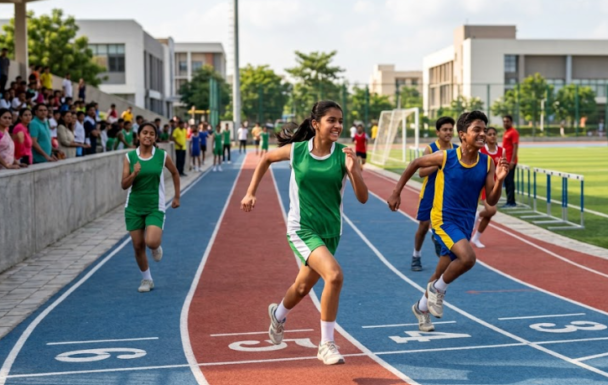
Choosing a school involves more than comparing academic results, classroom facilities, and examination performance. Parents also want their children to stay physically active, develop confidence, learn teamwork, and build healthy habits. This makes sports and athletic development an important consideration when comparing CBSE schools in Greater Noida.
Sports help students improve physical fitness while learning valuable life skills such as discipline, perseverance, cooperation, and time management. Regular participation in physical activities can also give children opportunities to discover their interests, handle competition, and understand the importance of consistent practice.
For parents evaluating Greater Noida World School (GNWS), sports and physical education are worth considering alongside academics, student safety, and extracurricular activities. Rather than judging a school solely by the number of sports it offers, families should examine the quality of coaching, accessibility of facilities, opportunities for participation, and encouragement provided to students at different skill levels.
Why Is Sports and Athletic Development Important in Schools?
School is an important stage for developing habits that can support lifelong physical and mental well-being. A balanced sports programme encourages students to participate in regular exercise while learning how to work towards individual and team goals.
Sports can contribute to children’s development in several ways.
- Physical fitness: Running, jumping, stretching, and playing games help students develop stamina, strength, coordination, and agility.
- Mental well-being: Physical activity can provide a healthy break from academic pressure and support emotional well-being.
- Self-discipline: Regular practice encourages punctuality, consistency, patience, and commitment.
- Teamwork: Team sports teach students to communicate, cooperate, and work towards shared objectives.
- Confidence: Learning new skills and gradually improving performance can help children develop confidence in their abilities.
- Resilience: Students learn to respond constructively to setbacks, accept feedback, and keep improving.
These benefits make physical education an important part of a well-rounded school experience, rather than simply an activity scheduled between academic lessons.
How Does GNWS Compare with Other CBSE Schools in Greater Noida?
When comparing Greater Noida World School with other CBSE schools in Greater Noida, parents should consider the complete sports experience offered to students. A school may have outdoor play areas, indoor activities, or organised competitions, but the real value depends on how effectively students can access and use these opportunities.
GNWS can be evaluated using the same practical criteria that parents apply to other schools in the region.
1. Availability and Quality of Sports Facilities
Sports facilities influence which activities students can practise and how regularly they can participate. Depending on the school’s current infrastructure, these facilities may include outdoor playgrounds, courts, indoor activity spaces, and designated areas for physical education.
Parents visiting GNWS should check which sports facilities are available, whether they are properly maintained, and how students use them during the school week.
It is also useful to ask whether facilities are accessible to different age groups and whether students have sufficient opportunities for supervised practice.
2. Physical Education and Sports Coaching
Facilities alone do not guarantee athletic development. Students also benefit from appropriate instruction, regular practice, and feedback from qualified physical education teachers or sports coaches.
When evaluating GNWS, parents can ask about the school’s current coaching arrangements, the sports included in its timetable, and the process used to help students improve their skills.
Effective coaching should consider age, ability, physical development, and individual interests. Beginners should receive opportunities to learn basic skills, while interested students should be able to explore more advanced training where available.
3. Participation in Sports Competitions
Inter-school competitions and sports events give students an opportunity to apply what they learn during practice. These experiences can improve teamwork, confidence, strategic thinking, and the ability to manage pressure.
Parents comparing CBSE schools in Greater Noida should ask whether students participate in inter-school tournaments, athletics events, friendly matches, or other organised competitions.
It is equally important to understand whether these opportunities are limited to selected teams or whether students with different experience levels can participate in suitable activities.
4. Equal Opportunities for Different Students
A strong school sports culture should encourage participation among students with different interests, abilities, and confidence levels.
Not every child wants to become a competitive athlete. Some may prefer recreational games, fitness activities, individual sports, or simply learning a new physical skill.
When assessing GNWS, parents should find out how the school encourages beginners, supports students who need additional guidance, and balances competitive sports with inclusive participation.
This approach can help more children experience the benefits of physical activity without feeling that sporting achievement is the only measure of success.
What Should Parents Look for in a School Sports Programme?
Parents can use several indicators to assess the overall quality of a school’s athletic development opportunities.
Regular Physical Activity
Students benefit when physical education and movement are incorporated consistently into their school routine. Parents should ask how frequently sports periods take place and whether students have opportunities for structured practice beyond occasional annual events.
Qualified Guidance and Safe Training
Appropriate supervision, age-suitable exercises, safe equipment, hydration breaks, and suitable playing surfaces are important parts of school sports.
Parents should also ask how the school manages sports-related injuries and whether first-aid arrangements and emergency procedures are in place.
Progress Beyond Winning
A school’s sports programme should recognise effort, improvement, fair play, and responsible conduct alongside competition results.
For example, a student who learns to cooperate with teammates, improves running technique, or develops confidence after regular practice has made meaningful progress even without winning a medal.
Balance Between Sports and Academics
Children need time for classroom learning, physical activity, rest, and personal interests. A well-organised school timetable should help students participate in sports without making academic responsibilities unnecessarily difficult to manage.
Parents can ask how the school schedules training, competitions, and other extracurricular commitments, particularly for students preparing for important examinations.
How Can Sports Help Students Develop Leadership and Teamwork?
Sports provide practical situations in which students can learn skills that are difficult to develop through textbooks alone.
In a team game, students must communicate, understand shared objectives, follow rules, and make decisions under pressure. They also learn to recognise that individual performance contributes to a wider team effort.
Leadership can develop when students take responsibility for coordinating activities, encouraging teammates, or following a strategy. At the same time, participating as a team member teaches children to respect decisions and support others.
Individual sports and athletics offer different but equally valuable lessons. Students learn to set personal targets, monitor progress, and remain committed to improvement.
For families considering GNWS, it is worth asking how the school’s sports activities help students develop these skills and whether students have opportunities to take on appropriate responsibilities during practices and competitions.
The Role of Sports in Physical Fitness and Emotional Well-Being
Children spend a considerable amount of time studying, completing assignments, and using digital devices. Regular movement helps them develop healthier routines and provides opportunities to engage with classmates outside traditional academic settings.
Physical activities such as running, cycling, athletics, and organised games can support cardiovascular fitness, muscle development, balance, and coordination. Activities selected according to a child’s age and abilities can also encourage a more positive relationship with exercise.
Sports can support social and emotional development as well. Students learn to manage excitement, cope with disappointment, accept constructive feedback, and recognise the importance of fair play.
However, children differ in their physical abilities and interests. A supportive school should encourage appropriate participation rather than putting unnecessary pressure on every student to achieve the same athletic outcomes.
Questions to Ask Before Choosing GNWS or Another CBSE School
Before deciding which school offers the best environment for sports and athletic development in Greater Noida, parents can ask the following questions during a campus visit.
- Which indoor and outdoor sports are currently available?
- How often do students participate in physical education and supervised sports activities?
- What coaching or specialist instruction is provided?
- Does the school organise or participate in inter-school competitions?
- Are sports opportunities available to beginners as well as experienced players?
- What safety measures, first-aid facilities, and injury-management procedures are followed?
- How does the school recognise student effort, improvement, and sportsmanship?
- Are there opportunities for students to explore different sports before choosing a preferred activity?
The answers can help parents understand whether the school’s actual sports programme matches their child’s needs and interests.
How Would GNWS Rate Against Other Schools for Athletic Development?
There is no reliable way to assign GNWS a definitive comparative rating without verified information about its current sports facilities, coaching staff, competition participation, student involvement, and athletic outcomes.
Parents should therefore compare GNWS with other CBSE schools in Greater Noida using consistent criteria instead of relying only on promotional descriptions or isolated achievements.
A practical assessment should consider five areas: facilities, coaching quality, regular participation, competitive opportunities, and student safety. Parents can also ask about recent sports events and the range of students who participate.
For one family, a school with strong competitive training may be the best fit. For another, accessible facilities, inclusive activities, and regular physical education may matter more. The right choice depends on whether the school provides meaningful opportunities for the child’s age, interests, and goals.
Greater Noida World School can be included in this comparison by reviewing its current offerings directly with the school and, where possible, observing its sports facilities and activities.
Conclusion
Sports and athletic development are essential considerations when selecting a school because they contribute to physical fitness, confidence, discipline, teamwork, and emotional growth. The best CBSE school in Greater Noida is not necessarily the one with the most impressive facilities; it is the one that gives students meaningful, safe, and consistent opportunities to participate and improve.
Parents considering Greater Noida World School (GNWS) should assess its available sports facilities, physical education schedule, coaching support, competition opportunities, and approach to inclusive participation. Comparing these factors with those of other schools will provide a more useful picture of its suitability for their child.
Ultimately, a successful school sports programme should help every student discover the value of movement, enjoy healthy competition, develop personal strengths, and build habits that support an active lifestyle well beyond the classroom.
Frequently Asked Questions (FAQs)
1. How can parents evaluate sports facilities at CBSE schools in Greater Noida?
Parents should check the available indoor and outdoor facilities, equipment condition, maintenance, supervision, and opportunities for regular student participation. A campus visit can help confirm whether the facilities meet the child’s interests and age group.
2. Is Greater Noida World School suitable for students interested in sports?
Parents interested in GNWS should contact the school for details about its current sports facilities, physical education programme, coaching arrangements, and competition opportunities. These details will help them determine whether the school meets their child’s needs.
3. Why is athletic development important in school education?
Athletic development supports physical fitness, coordination, teamwork, discipline, confidence, and resilience. Regular physical activity also encourages students to develop healthy habits that can continue into adulthood.
4. What should parents compare when choosing the best sports school in Greater Noida?
Parents should compare sports facilities, coaching quality, training frequency, competition participation, student safety, and accessibility for different skill levels. They should also consider how the sports programme fits their child’s interests and academic schedule.
5. Do school sports improve students’ academic performance?
Sports can support concentration, healthy routines, and emotional well-being, which may benefit learning. However, academic outcomes vary between individuals, and sports should be viewed as one component of a balanced education rather than a guarantee of higher marks.
6. How do school sports develop teamwork and leadership?
Team games teach communication, cooperation, shared responsibility, and respect for rules. Sports also give students opportunities to make decisions, encourage others, handle setbacks, and work towards common goals.
7. What safety measures should a school provide during sports activities?
Parents should ask about trained supervision, appropriate equipment, safe playing surfaces, hydration, first-aid arrangements, injury reporting, and emergency procedures. Activities should also be suitable for students’ ages and physical abilities.