
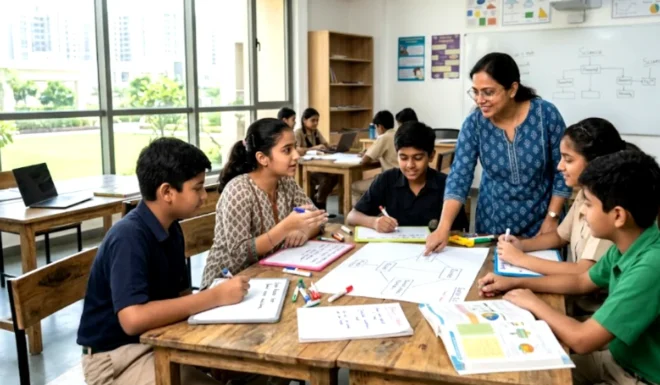
Choosing the right school involves much more than comparing examination results, infrastructure, or extracurricular activities. Parents also want their children to become disciplined, respectful, honest, and responsible individuals who can contribute positively to society. This is why many families searching for the best school in Delhi NCR for discipline and values consider a school’s approach to character development as important as its academic environment.
A good school helps students understand the difference between knowing the rules and doing the right thing, even when nobody is watching. It encourages respect for teachers, kindness towards classmates, responsibility for personal actions, and awareness of the wider community.
In Greater Noida, parents exploring CBSE education can consider institutions such as Greater Noida World School (GNWS) while evaluating their approach to academics, student behaviour, personal development, and school culture. The right choice ultimately depends on how effectively a school integrates discipline, moral values, and responsible citizenship into everyday learning.
What Makes a School Good at Promoting Discipline and Values?
A school that promotes discipline and values creates an environment where students learn to manage their behaviour, respect others, and make thoughtful decisions. Discipline should not be limited to following instructions or maintaining silence in classrooms. It should help children develop self-control, consistency, and accountability.
For example, arriving on time teaches punctuality, completing assignments develops responsibility, and respecting different opinions builds tolerance. These everyday experiences help students understand how their actions affect other people.
When comparing CBSE schools in Delhi NCR, parents should look beyond written policies and examine how these principles are practised in classrooms, assemblies, group activities, and interactions between teachers and students.
A positive school culture generally encourages three important habits:
- Self-discipline: Students learn to manage their time, follow routines, and complete responsibilities independently.
- Respect and empathy: Children understand the importance of treating classmates, teachers, support staff, and community members with consideration.
- Accountability: Students are encouraged to acknowledge mistakes, learn from consequences, and make better decisions in the future.
These habits provide a foundation for academic success, healthy relationships, and responsible adult life.
Why Value-Based Education Matters in Today’s Schools
Value-based education helps students develop principles that guide their decisions beyond the classroom. Academic knowledge prepares children to solve problems, but values influence how they use that knowledge and interact with others.
For instance, a student may achieve excellent marks but still need guidance in teamwork, honesty, or accepting constructive criticism. Schools that integrate character development into everyday learning help students grow in both areas.
For families looking for a school in Greater Noida that supports holistic development, value-based education is an important factor to consider.
1. Honesty and Integrity
Honesty teaches students to speak truthfully, complete their own work, and acknowledge their mistakes. These qualities become especially important during examinations, competitions, and collaborative projects.
Teachers can encourage integrity by appreciating genuine effort rather than focusing exclusively on results. When students feel comfortable admitting mistakes, they are more likely to learn from them.
2. Respect for Others
Respect begins with listening when someone else is speaking, accepting reasonable differences of opinion, and treating everyone fairly. Students should understand that differences in language, background, abilities, and perspectives are not reasons for exclusion.
Schools can reinforce respect through classroom discussions, group projects, shared responsibilities, and clear expectations about appropriate behaviour.
3. Empathy and Kindness
Empathy allows children to understand how their words and actions affect others. It can help prevent bullying, strengthen friendships, and encourage students to support classmates who may be experiencing difficulties.
Simple activities, such as cooperative learning, peer support, and age-appropriate discussions about social situations, can help children practise empathy rather than merely memorise its definition.
4. Responsibility and Accountability
Responsible students learn to care for their belongings, complete assigned tasks, follow school rules, and take ownership of their decisions.
Giving children meaningful responsibilities helps develop independence. Whether they manage a classroom activity or participate in a group assignment, students learn that dependable behaviour contributes to a better learning environment.
How Does Discipline Help Students Become Responsible Citizens?
Discipline and responsible citizenship are closely connected. A responsible citizen understands personal rights while recognising obligations towards other people and the community.
In school, these lessons can begin with small actions. Students who follow shared rules, respect public property, dispose of waste correctly, and cooperate with classmates develop habits that can continue into adulthood.
Understanding Rules and Their Purpose
Rules are more meaningful when students understand why they exist. Classroom expectations about safety, punctuality, respectful communication, and academic honesty should be explained clearly.
When children understand that rules protect everyone’s learning and well-being, they are more likely to follow them willingly. This approach supports self-discipline instead of relying entirely on punishment or external supervision.
Developing Respect for Diversity
Delhi NCR brings together families from different regions, languages, and cultural backgrounds. Students benefit from learning how to communicate respectfully with people whose experiences differ from their own.
Cultural celebrations, collaborative projects, discussions, and inclusive classroom practices can encourage mutual understanding. These experiences help children recognise that responsible citizenship involves fairness, cooperation, and respect for diversity.
Encouraging Environmental Responsibility
Environmental awareness is another practical part of citizenship education. Students can learn to conserve water, reduce unnecessary waste, protect plants, and keep their surroundings clean.
Schools may support these lessons through activities such as recycling drives, campus cleanliness initiatives, and environmental projects. Parents should check which initiatives are actually conducted and how students participate in them.
Greater Noida World School: An Option for Holistic Student Development
Parents comparing schools in Greater Noida should evaluate not only academic opportunities but also the environment in which children develop their behaviour, confidence, and social awareness.
Greater Noida World School (GNWS) is an option for families exploring school education in the Greater Noida area. When considering GNWS, parents can examine how its academic environment, teaching practices, student activities, and school expectations align with their family’s priorities for discipline and value-based learning.
The aim should be to identify a school where children receive guidance to become independent learners and considerate members of their community.
A Supportive Environment for Learning
A supportive school environment gives students clear expectations while allowing them to ask questions, express concerns, and learn from mistakes.
Parents visiting GNWS can observe how teachers communicate with students, how classroom routines are maintained, and whether children appear comfortable seeking help. Respectful teacher-student relationships can support positive behaviour and encourage students to take greater responsibility for their learning.
Character Development Through Everyday Activities
Values are more likely to become lasting habits when students practise them regularly. Classroom discussions, team assignments, assemblies, cultural activities, and student responsibilities can provide opportunities to develop cooperation, fairness, patience, and leadership.
Parents can ask GNWS about its current programmes for life skills, student leadership, community participation, and character development. Understanding the activities offered and how students participate will provide a clearer picture than relying on general statements about school values.
Balancing Academic Learning and Personal Growth
A well-rounded school experience should support academic progress without overlooking emotional development, physical well-being, and interpersonal skills.
Students need opportunities to learn independently, work in teams, handle setbacks, and communicate their ideas confidently. Activities beyond textbook learning can help them discover their interests and understand the importance of perseverance.
For families considering Greater Noida World School, it is worth discussing how the school balances classroom instruction, co-curricular activities, student well-being, and behavioural expectations.
What Should Parents Check Before Choosing a School in Delhi NCR?
The best school for one family may not automatically be the best choice for another. Parents should evaluate the school’s everyday practices, communication systems, and approach to student development before making a decision.
Here are five important factors to consider when comparing the best CBSE schools in Greater Noida and the wider Delhi NCR region.
1. The School’s Approach to Discipline
Ask how the school manages repeated classroom disruptions, conflicts between students, and violations of school rules. Look for clear, age-appropriate procedures that emphasise fairness, guidance, and accountability.
Discipline should protect students’ safety and dignity while helping children understand the consequences of their actions.
2. Teacher Behaviour and Student Relationships
Observe whether teachers communicate calmly, listen to students, and encourage respectful discussion. A positive learning environment allows students to express concerns without unnecessary fear or embarrassment.
Ask how teachers help students develop confidence, emotional awareness, and constructive ways of resolving disagreements.
3. Opportunities for Leadership and Teamwork
School councils, group projects, classroom responsibilities, sports, and cultural activities can help students develop leadership and cooperation.
Parents should find out whether these opportunities are accessible to different students or concentrated among a small group of high achievers.
4. Safety, Inclusion, and Anti-Bullying Practices
A school’s values should be reflected in how it protects students and responds to inappropriate behaviour. Parents should review the school’s safety arrangements, supervision practices, anti-bullying procedures, and systems for reporting concerns.
A safe environment makes it easier for children to participate, build friendships, and focus on learning.
5. Communication Between Parents and Teachers
Consistent communication helps families understand their child’s academic progress, behaviour, and social development.
Ask how the school shares feedback, arranges parent-teacher meetings, and works with families when a student needs additional guidance. Cooperation between home and school can make lessons about responsibility and respect more consistent.
How Parents Can Reinforce School Values at Home
Schools have an important role in character development, but children also learn from what they observe at home. When parents and teachers reinforce similar principles, students receive a clearer message about appropriate behaviour.
Families can support value-based education through simple, consistent practices.
- Model respectful communication: Children notice how adults handle disagreements, speak to others, and respond to frustration.
- Encourage age-appropriate independence: Let children manage school bags, organise study schedules, and complete suitable household responsibilities.
- Discuss everyday decisions: Talk about honesty, fairness, kindness, and accountability using examples from daily life.
- Appreciate effort and improvement: Recognise perseverance, teamwork, and responsible choices instead of praising marks alone.
- Encourage community awareness: Involve children in suitable environmental activities, helping others, and caring for shared spaces.
These habits help children understand that discipline is not simply a school requirement. It is a personal quality that influences relationships, decisions, and future responsibilities.
Conclusion: Which School Is Best for Promoting Discipline, Values, and Responsible Citizenship?
The best school in Delhi NCR for discipline and values is one that combines academic learning with a consistent commitment to respect, honesty, responsibility, inclusion, and personal growth. Rather than judging a school solely by its reputation or facilities, parents should evaluate how these principles are reflected in everyday student experiences.
For families exploring CBSE schools in Greater Noida, Greater Noida World School (GNWS) can be considered as part of their school-selection process. Parents should review its current policies, learning environment, student activities, safety practices, and approach to character development to determine whether it meets their expectations.
Ultimately, education should prepare children not only to succeed in examinations but also to make thoughtful decisions, respect others, and contribute positively to society. A school that consistently encourages these qualities can help students develop into confident, disciplined, and responsible citizens.
Frequently Asked Questions (FAQs)
1. Which school in Delhi NCR is best for promoting discipline and values?
The right school is one that combines clear behavioural expectations with respect, fairness, student well-being, and opportunities for character development. Parents should compare school policies, teacher-student relationships, and actual student activities before choosing.
2. Is Greater Noida World School a good option for value-based education?
Greater Noida World School (GNWS) is an option parents can explore when comparing schools in Greater Noida. Families should contact the school to learn about its current programmes, discipline policies, student activities, and approach to moral and social development.
3. Why is discipline important in school education?
Discipline helps students develop punctuality, self-control, consistency, and accountability. It also supports classroom learning by encouraging students to respect shared rules and understand how their behaviour affects others.
4. How does value-based education develop responsible citizens?
Value-based education encourages honesty, empathy, respect for diversity, environmental awareness, and community responsibility. Students practise these qualities through everyday classroom interactions, collaborative activities, and opportunities to take responsibility.
5. What should parents look for in the best CBSE school in Greater Noida?
Parents should assess academic quality, teacher-student relationships, student safety, discipline policies, extracurricular opportunities, parent-teacher communication, and support for emotional and social development.
6. How can schools teach moral values to students?
Schools can integrate moral values into classroom discussions, group assignments, assemblies, leadership activities, and community projects. Consistent teacher behaviour and fair disciplinary practices also help students understand and apply these values.
7. What is the difference between discipline and punishment in schools?
Discipline focuses on helping students understand expectations, manage behaviour, and take responsibility for their actions. Punishment focuses on consequences for misconduct. Constructive discipline aims to correct behaviour while protecting students’ dignity and encouraging better decisions.