
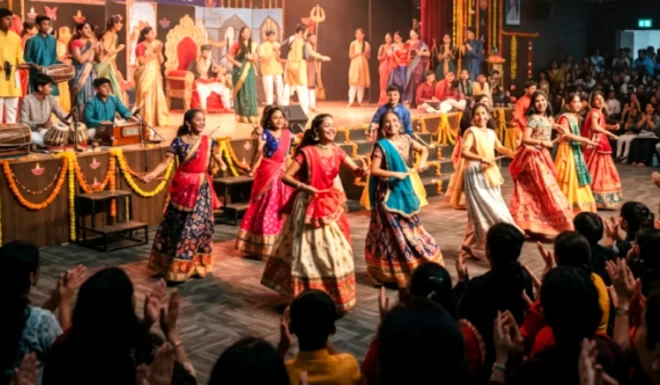
School education is not limited to textbooks, examinations and classroom lessons. Some of the most valuable lessons children learn happen when they participate in a debate, perform on stage, organise an event, play music or work together on a creative project.
School clubs and cultural activities give students opportunities to discover their interests, express their ideas and develop qualities that support their personal growth. These experiences can help children become more confident, creative, responsible and comfortable working with others.
For students exploring schools in Greater Noida, Greater Noida World School (GNWS) provides an example of how different school clubs and extracurricular opportunities can complement classroom education. Its clubs include public speaking, music, dance, dramatics, science, mathematics, environmental activities and art and craft.
But how exactly do these activities shape a young personality? From developing leadership qualities to learning teamwork and emotional expression, their contribution goes far beyond entertainment.
1. School Clubs Help Students Discover Their Hidden Talents
Every child has different interests and abilities. Some enjoy painting, others love science experiments, while many feel excited about dancing, singing or speaking in front of an audience.
School clubs provide a platform where students can explore these interests beyond regular classroom lessons.
For example, students participating in science clubs can experiment with new ideas, while members of art and craft clubs can express their imagination through creative projects.
At Greater Noida World School (GNWS), students can explore different interests through clubs such as Science Club, Art and Craft Club, Music Club, Dance Club and Dramatics Club.
Such opportunities allow students to understand their strengths and develop interests that may influence their future choices.
2. Cultural Activities Build Confidence and Communication Skills
Standing on a stage, speaking in front of classmates or performing in a cultural programme can feel challenging for many students.
However, regular participation helps them become more comfortable expressing their thoughts and ideas.
Activities such as:
- Public speaking competitions
- Group discussions and debates
- Drama and theatre performances
- Singing and dancing competitions
- School assemblies and cultural celebrations
give students practical opportunities to improve their communication skills.
GNWS’s Public Speaking Club and Dramatics Club provide platforms for students to explore verbal expression and performance.
Over time, these experiences can help students communicate more confidently in classrooms, competitions and everyday situations.
3. Team Activities Develop Leadership and Cooperation
Leadership is not simply about giving instructions to others. It also involves listening, taking responsibility, solving problems and helping a group achieve a common goal.
School clubs often involve group projects, performances, exhibitions and competitions where students work together.
For example, organising a school cultural event may require students to manage rehearsals, coordinate performances, prepare decorations and communicate with their teammates.
These experiences teach students to:
- Respect different opinions.
- Share responsibilities.
- Make decisions collectively.
- Support team members.
- Handle disagreements constructively.
Through such activities, students learn that successful teamwork requires cooperation rather than individual recognition.
4. Music, Dance and Drama Encourage Creative Expression
Not every student expresses themselves through written assignments or classroom discussions. Music, dance, painting and drama offer alternative ways to communicate thoughts and emotions.
Cultural activities encourage children to explore different forms of artistic expression while appreciating different traditions and perspectives.
Music develops listening and rhythm, dance encourages coordination and discipline, while drama allows students to understand characters, emotions and situations from different viewpoints.
At GNWS, Music, Vocal Music, Dance and Dramatics clubs offer opportunities for students to explore their artistic interests.
Participating in cultural celebrations and stage performances can also help students appreciate India’s diverse cultural traditions.
5. School Clubs Encourage Discipline and Responsibility
Regular participation in extracurricular activities requires commitment. Students must attend practice sessions, complete assigned tasks and prepare for upcoming events.
For instance, a student participating in the school band must practise regularly and coordinate with other performers. Similarly, members of an environment club may participate in awareness activities and sustainability projects.
These responsibilities help children understand the importance of punctuality, consistency and accountability.
Unlike lessons learned only through instructions, these qualities develop through practical experiences.
6. Cultural Activities Improve Social and Emotional Development
School activities bring together students with different interests, personalities and backgrounds.
Working with others helps children understand different perspectives and become more comfortable in social situations.
Participation can encourage:
- Empathy towards others.
- Respect for cultural differences.
- Better emotional expression.
- Healthy competition.
- Friendships and social connections.
The OECD’s research on social and emotional learning also reports positive associations between extracurricular participation and skills such as creativity, sociability, assertiveness and curiosity.
However, the quality of participation matters. Activities should be supportive and enjoyable rather than becoming another source of academic pressure.
7. Different School Clubs Develop Different Life Skills
Each club offers a different learning experience. Parents and students should explore activities according to individual interests rather than choosing them only because they are popular.
| School club | Skills students can practise |
|---|---|
| Public Speaking Club | Communication and confidence |
| Science Club | Curiosity and problem-solving |
| Art and Craft Club | Creativity and imagination |
| Music Club | Listening and artistic expression |
| Dance Club | Coordination and discipline |
| Dramatics Club | Expression and teamwork |
| Environment Club | Responsibility and awareness |
| Mathematics Club | Logical and analytical thinking |
| Social Science Club | Research and social understanding |
| School Band Club | Cooperation and coordination |
At Greater Noida World School, this variety of clubs gives students opportunities to explore different areas of learning alongside their academic curriculum.
8. Choosing a School That Values Overall Development
Parents looking for a school should consider more than academic results, infrastructure and examination performance. They should also understand how students participate in cultural programmes, clubs, sports and creative activities.
Before choosing a school, consider these questions:
- Are different clubs available for students?
- Can students choose activities according to their interests?
- Do teachers encourage participation?
- Are cultural programmes and competitions organised regularly?
- Do students receive opportunities to take leadership roles?
- Are extracurricular activities balanced with academics?
For families exploring schools in Greater Noida, Greater Noida World School (GNWS), located in Sigma I, is worth considering. Its school clubs include environmental activities, public speaking, music, dance, art and craft, dramatics, science, mathematics, social science, school band and yoga excursions.
The variety of activities provides opportunities for students to explore interests and practise different skills alongside classroom learning.
Conclusion
School clubs and cultural activities play an important role in shaping young personalities by giving students opportunities to express themselves, discover their talents and develop practical life skills.
Confidence, leadership, teamwork, creativity and responsibility are qualities that grow through regular participation and meaningful experiences.
For parents, choosing a school that values both academic learning and extracurricular participation can help children experience a more balanced educational journey. At GNWS, different school clubs and cultural activities offer students opportunities to explore their interests and become more confident individuals.
Ultimately, education should prepare children not only to perform well in examinations but also to communicate, collaborate, create and contribute positively to society.
Frequently Asked Questions (FAQs)
1. How do school clubs help in personality development?
School clubs provide opportunities to practise communication, teamwork, leadership, creativity and decision-making through practical activities.
2. Why are cultural activities important for students?
Cultural activities encourage artistic expression, confidence, social interaction and appreciation of different traditions.
3. Which school activities help students build confidence?
Public speaking, debates, theatre, dance performances, music competitions and group presentations can help students become more confident.
4. How do extracurricular activities develop leadership skills?
Students learn leadership by organising events, coordinating teams, accepting responsibilities and making decisions during group activities.
5. What are the different types of school clubs?
Common school clubs include science, mathematics, environment, music, dance, drama, art and craft, public speaking and social science clubs.
6. Do cultural activities affect academic performance?
They can complement classroom learning by encouraging creativity, discipline and communication. However, activities should be balanced with study time and adequate rest.
7. Does GNWS offer school clubs and cultural activities?
Yes. Greater Noida World School offers clubs covering public speaking, music, dance, dramatics, science, mathematics, art and craft, environment, social science, school band and yoga excursions.