
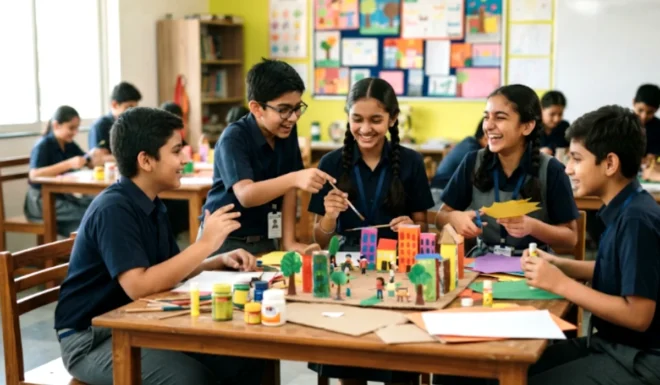
A school is more than a place where students attend classes, complete homework, and prepare for examinations. It is also where they build friendships, discover their interests, develop confidence, and learn how to deal with challenges.
For many students, a positive school experience is shaped by small but meaningful things. A teacher who listens patiently, a friend who offers support, an opportunity to participate in an activity, or a classroom where mistakes are treated as part of learning can make a real difference.
Parents searching for the best schools in Greater Noida often consider academic performance, infrastructure, and extracurricular facilities. However, there is another important question worth asking: Does the school make students feel happy, confident, and supported?
A positive school environment can help students feel comfortable expressing themselves, participating in class, and developing a healthy attitude towards learning.
Here is what contributes to a school experience where students feel valued and encouraged to grow.
Why Student Happiness Matters in School
Students spend a significant part of their day at school. Their experiences there can influence how they approach learning, interact with others, and respond to challenges.
When students feel comfortable and supported, they may find it easier to ask questions, participate in classroom discussions, and seek help when they need it.
Student happiness does not mean that school should always be easy or that students should never face difficulties. It means creating an environment where they feel respected, safe, and supported while learning to overcome challenges.
A positive school culture helps students understand that their value is not determined only by examination marks or classroom performance.
1. Teachers Who Listen and Understand Students
One of the most important factors in a student’s school experience is the relationship they share with their teachers.
A teacher who listens to students, encourages questions, and explains concepts patiently can help create a welcoming classroom environment.
Students may sometimes hesitate to ask questions because they are worried about giving the wrong answer. Supportive teachers help them understand that learning involves curiosity, practice, and mistakes.
For example, when a student struggles with a mathematics problem, a teacher can guide them through the steps rather than simply pointing out the incorrect answer.
This approach can help students become more comfortable asking for help and participating in class.
2. A Classroom Where Students Feel Safe to Express Themselves
Confidence develops when students have opportunities to express their thoughts and ideas.
A positive classroom encourages students to ask questions, share opinions, discuss topics, and participate in activities without fear of embarrassment.
Different students have different strengths. Some may enjoy speaking in front of the class, while others may prefer writing, drawing, or working in small groups.
A supportive learning environment recognises these differences.
When students feel their opinions are respected, they can gradually become more comfortable expressing themselves and engaging with their classmates.
3. Encouragement Beyond Academic Marks
Academic achievement is important, but students have many other strengths worth recognising.
A student may show creativity through art, leadership during a group activity, teamwork on the playground, or determination while learning a new skill.
Recognising these efforts can help students understand that success takes different forms.
Instead of focusing only on examination results, schools can encourage students for:
- Consistent effort and improvement
- Participation in classroom activities
- Creativity and problem-solving
- Teamwork and cooperation
- Responsibility and leadership
- Positive behaviour and kindness
This broader approach to student development can help children build confidence in their abilities.
4. Friends and Positive Peer Relationships
Friendships are an important part of school life.
Students learn many social skills through their interactions with classmates, including sharing, cooperation, communication, and understanding different perspectives.
Group activities, sports, classroom projects, and cultural events can provide opportunities for students to build positive relationships.
Schools can also encourage respectful behaviour and help students understand the importance of including others.
When students feel accepted by their classmates, they may feel more comfortable participating in school activities and expressing their interests.
5. Sports and Activities That Help Students Discover Their Strengths
Not every student enjoys learning in the same way.
Some students may find their confidence through sports, while others may discover their interests through music, dance, drama, painting, or technology-based activities.
Extracurricular activities offer students opportunities to explore different interests outside regular academic lessons.
Participating in a sports team, performing on stage, or contributing to a creative project can help students develop skills such as:
- Teamwork
- Communication
- Discipline
- Decision-making
- Time management
- Confidence
These experiences also allow students to learn from challenges and celebrate personal progress.
6. A School Culture That Supports Emotional Well-being
Students can experience a range of emotions during their school years.
They may feel excited about a new activity, worried about an examination, disappointed after a setback, or nervous about speaking in front of others.
A supportive school environment acknowledges these experiences.
Teachers and school staff can help students understand their emotions, communicate their concerns, and identify appropriate ways to seek support.
A positive school culture also encourages kindness, respect, and responsible behaviour.
When students know that their concerns will be taken seriously, they may feel more comfortable approaching a trusted adult when they need help.
7. Opportunities to Participate and Take Responsibility
Confidence often grows through experience.
When students are given opportunities to participate in school activities, they can gradually learn to take responsibility and make decisions.
These opportunities may include:
- Class presentations
- Group assignments
- Student clubs
- School assemblies
- Cultural programmes
- Sports competitions
- Classroom responsibilities
Participation does not always have to involve standing on a stage or speaking to a large audience.
Even small responsibilities, such as helping organise classroom materials or contributing an idea during a group project, can help students feel involved.
8. How Parents and Schools Can Work Together
A student’s school experience is influenced by both the school environment and support at home.
Regular communication between parents and teachers can help adults understand a student’s progress, interests, and challenges.
Parents can support their children by asking about their school day, listening to their concerns, and recognising their efforts.
Schools can strengthen this partnership through parent-teacher meetings, progress updates, and opportunities to discuss student development.
When parents and teachers work together, they can provide more consistent guidance and encouragement.
What Should Parents Look for When Choosing a School?
Parents exploring the best schools in Greater Noida can consider more than academic results and infrastructure.
During a school visit, it may be useful to ask:
| Factor | What parents should observe |
|---|---|
| Teacher interaction | Do teachers listen patiently and communicate respectfully? |
| Classroom environment | Are students encouraged to ask questions? |
| Student participation | Do children get opportunities to share ideas? |
| Extracurricular activities | Are sports, arts, and clubs available? |
| Emotional support | Can students approach teachers when they need help? |
| School culture | Are kindness, respect, and inclusion encouraged? |
| Parent communication | Does the school keep parents informed about student progress? |
These observations can help parents understand whether a school offers an environment that supports both academic learning and personal development.
How GNWS Can Contribute to a Positive School Experience
For parents exploring schools in Greater Noida, Greater Noida World School (GNWS) is one institution to consider when comparing school environments and student development opportunities.
When evaluating GNWS or any other school, parents should explore how its classroom practices, extracurricular activities, teacher interactions, and student support systems contribute to a positive school experience.
A campus visit can provide a better understanding of how students participate in activities, interact with teachers, and experience everyday school life.
Parents can also enquire about opportunities for students to explore interests, develop communication skills, and participate in sports and cultural programmes.
The aim is to understand how the school supports students beyond classroom instruction and examination preparation.
Frequently Asked Questions
What makes students happy at school?
Students may feel happier at school when they experience positive relationships with teachers and classmates, have opportunities to participate, and feel safe and respected.
How can schools help students become more confident?
Schools can encourage confidence by providing opportunities for participation, recognising effort, supporting students through challenges, and creating classrooms where students can express their ideas.
Why is emotional support important for students?
Emotional support can help students feel understood and comfortable seeking help when they face academic, social, or personal challenges.
How do extracurricular activities improve student confidence?
Sports, music, art, drama, and other activities give students opportunities to explore their interests, practise skills, interact with others, and recognise their strengths.
What should parents look for in a school beyond academics?
Parents can consider teacher-student relationships, school culture, safety, extracurricular activities, student participation, emotional support, and communication with families.
How can parents help children feel supported at school?
Parents can listen to their children’s experiences, communicate with teachers, recognise their efforts, and encourage them to seek help when they need it.
Final Thoughts
A positive school experience is built through everyday interactions, supportive relationships, and meaningful opportunities to learn.
Students feel more comfortable when their ideas are respected, their efforts are recognised, and they have people they can approach when they face challenges.
For parents choosing a school in Greater Noida, looking beyond academic performance can offer a more complete picture of the environment their child will experience.
A school that values learning, kindness, confidence, and personal growth can help students develop skills that remain useful long after they leave the classroom.