
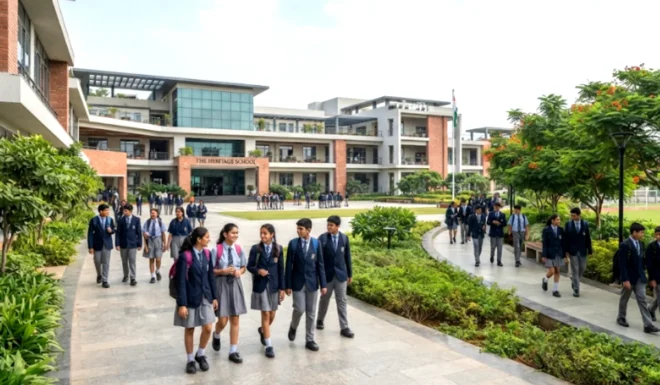
A school’s campus plays a much bigger role in a child’s education than simply providing classrooms and playgrounds. Students spend a significant part of their day at school, making the surrounding environment an important factor in their safety, comfort, confidence and academic development. From secure entry points and hygienic washrooms to well-ventilated classrooms and accessible learning spaces, every infrastructure detail contributes to a better educational experience.
Today, parents are looking beyond academic results when choosing a school. They also want to understand how institutions protect students, maintain cleanliness, provide healthcare support and create an environment where children feel comfortable participating in different activities.
For families exploring schools in Greater Noida, Greater Noida World School (GNWS) is an option worth considering. Its campus facilities, CCTV-based security arrangements, technology-enabled classrooms and child-focused learning environment highlight the importance of combining infrastructure with student well-being.
Let’s understand why safe and student-friendly campus infrastructure matters and what parents should evaluate before selecting a school.
1. A Safe Campus Creates a Better Learning Environment
Children learn more effectively when they feel secure and comfortable. A well-managed school campus helps reduce unnecessary safety concerns and allows students to concentrate on classroom activities, friendships and personal development.
Schools should pay attention to:
- Secure entry and exit points.
- CCTV surveillance in appropriate common areas.
- Trained security personnel.
- Visitor registration and monitoring.
- Regular safety inspections.
- Clear emergency response procedures.
The Central Board of Secondary Education (CBSE) issued an amendment to its affiliation bye-laws in July 2025 requiring CCTV coverage at specified locations, including entrances, corridors, classrooms, laboratories, libraries and playgrounds, with footage preserved for at least 15 days. CBSE
These measures demonstrate why school safety should be an essential part of campus planning rather than an additional facility.
2. Cleanliness and Hygiene Protect Student Health
Hygiene is another important aspect of student-friendly school infrastructure. Children regularly use classrooms, washrooms, drinking water facilities, laboratories and common areas. Poor maintenance in these spaces can affect their comfort and health.
A well-maintained school should provide:
- Clean and hygienic washrooms.
- Safe drinking water facilities.
- Regular cleaning of classrooms and corridors.
- Proper waste disposal systems.
- Clean canteen and food preparation areas.
- First-aid and basic medical support.
CBSE infrastructure guidelines also specify the need for adequate drinking water, hygienic toilets and appropriate sanitation arrangements.
For parents, checking the actual condition of these facilities during a campus visit can provide a better understanding of the school’s maintenance standards.
3. Comfortable Classrooms Improve Student Engagement
Classroom infrastructure directly influences the everyday learning experience. Proper lighting, ventilation, comfortable furniture and suitable classroom space help students participate in lessons without unnecessary discomfort.
Modern classrooms can also use smart boards, digital teaching resources and interactive learning tools to explain difficult concepts.
A student-friendly classroom should include:
- Adequate natural lighting and ventilation.
- Age-appropriate furniture.
- Sufficient space for classroom activities.
- Interactive teaching resources.
- Comfortable seating arrangements.
- A clean and organised learning environment.
According to the National Curriculum Framework for the Foundational Stage, adequate infrastructure and learning resources contribute to creating a conducive learning environment for children.
4. Sports Facilities Support Physical and Mental Development
Education should not remain limited to textbooks and examinations. Physical activities help children develop discipline, teamwork, coordination and confidence.
A school with suitable sports infrastructure gives students opportunities to participate in physical education and explore their interests.
Important facilities include:
- Outdoor playgrounds.
- Indoor sports spaces.
- Basketball and badminton facilities.
- Football and athletics areas.
- Yoga and physical fitness spaces.
- Equipment for age-appropriate activities.
Parents should also ask whether students receive regular opportunities to participate in sports rather than simply checking whether a playground exists.
5. Accessible Infrastructure Encourages Inclusive Education
A genuinely student-friendly campus should consider the needs of children with different physical abilities and learning requirements.
Accessible infrastructure helps more students participate comfortably in everyday school activities.
Important features include:
- Ramps at appropriate entry and exit points.
- Accessible washrooms.
- Safe staircases and corridors.
- Suitable classroom arrangements.
- Clear signage.
- Support systems for children requiring additional assistance.
CBSE’s infrastructure provisions refer to accessibility arrangements, including ramps and facilities for wheelchair users, in accordance with applicable disability-related requirements. Central Board of Secondary Education
Inclusive infrastructure helps create an educational environment where students feel respected and supported.
6. Laboratories and Libraries Encourage Practical Learning
A student-friendly campus should provide opportunities to explore concepts beyond classroom explanations. Laboratories, libraries and innovation spaces allow children to experiment, research and develop independent thinking.
Useful learning facilities include:
- Science laboratories for practical experiments.
- Computer laboratories for digital skills.
- Mathematics laboratories for activity-based learning.
- Libraries for reading and research.
- Robotics and tinkering laboratories.
- Art and creative activity spaces.
These facilities help students connect theoretical knowledge with practical applications and develop curiosity from an early age.
7. How Greater Noida World School Focuses on Student-Friendly Infrastructure
Greater Noida World School (GNWS), located in Sigma 1, Greater Noida, provides a learning environment that combines academic facilities, technology-supported education and student activities.
The school’s official facilities information highlights several campus features designed to support classroom learning and student comfort.
Important facilities at GNWS include:
- Smart board classrooms: Technology-enabled classrooms supporting interactive teaching and learning.
- Security arrangements: CCTV-based campus security.
- Clean drinking water: Purified drinking water and hygienic washrooms.
- Learning laboratories: Computer, mathematics, science discovery and tinkering facilities.
- Creative spaces: Art studio, sculpture studio, music and dance facilities.
- Library: A dedicated space supporting reading and independent learning.
- Sports infrastructure: Facilities supporting physical activities and student participation.
The school also describes its focus on a healthy learning environment and child-centred teaching methods.
For parents considering schools in Greater Noida, GNWS is worth exploring because its infrastructure combines academic resources, creative spaces and facilities supporting everyday student needs. Parents should visit the campus to evaluate the current condition and availability of individual facilities. Greater Noida World School+1
8. Emotional Safety Is Equally Important
A safe campus is not defined only by buildings, CCTV cameras and security guards. Students should also feel emotionally comfortable when interacting with teachers and classmates.
Schools should encourage:
- Respectful communication between students and teachers.
- Anti-bullying awareness and reporting systems.
- Equal opportunities for participation.
- Supportive teacher-student relationships.
- Counselling and guidance where available.
- A culture of inclusion and mutual respect.
CBSE’s July 2025 safety amendment also highlights emotional safety and the importance of addressing bullying and other psychosocial concerns. CBSE
When students feel respected, they are more likely to ask questions, participate in activities and build healthy relationships.
What Should Parents Check During a School Campus Visit?
Before finalising admission, parents should inspect the school rather than depending entirely on brochures or online photographs.
| Infrastructure factor | What parents should check |
|---|---|
| Campus security | CCTV monitoring and visitor management |
| Classrooms | Lighting, ventilation and furniture |
| Hygiene | Clean washrooms and drinking water |
| Medical support | First-aid facilities and emergency arrangements |
| Sports | Playgrounds and regular physical activities |
| Accessibility | Ramps and inclusive facilities |
| Laboratories | Equipment and student access |
| Transport | Vehicle safety and supervision |
| Emotional safety | Anti-bullying policies and student support |
Parents should also request relevant building safety, fire safety and other applicable compliance certificates.
Frequently Asked Questions
1. Why is school infrastructure important for students?
School infrastructure influences students’ safety, comfort, health and learning experiences. Well-maintained classrooms, laboratories, libraries and sports facilities support academic and personal development.
2. What safety facilities should a school campus have?
A school should have appropriate CCTV surveillance, secure entry and exit points, visitor management, fire safety arrangements, emergency procedures and trained staff.
3. How does a clean school environment benefit children?
Clean classrooms, hygienic washrooms and safe drinking water support student health and create a more comfortable environment for everyday learning.
4. Why are smart classrooms important in modern schools?
Smart classrooms support interactive teaching through digital resources, presentations and visual explanations. They can make difficult concepts easier to understand when combined with effective teaching.
5. What makes a school campus student-friendly?
A student-friendly campus combines safety, hygiene, comfortable classrooms, accessible infrastructure, sports facilities, laboratories and supportive teacher-student relationships.
6. Is Greater Noida World School equipped with modern campus facilities?
GNWS lists smart classrooms, science and computer-related laboratories, a library, creative spaces, purified drinking water, hygienic washrooms and CCTV-based security among its facilities.
7. What should parents check before school admission?
Parents should inspect classroom conditions, campus security, sanitation, sports facilities, transport arrangements, medical support, accessibility and the school’s approach to student well-being.
Conclusion
Safe and student-friendly campus infrastructure is an essential part of quality school education. A well-designed school environment supports children’s physical health, emotional well-being, academic participation and overall development.
From secure entry points and hygienic washrooms to modern laboratories, accessible classrooms and sports facilities, every element contributes to the everyday school experience.
For families exploring educational institutions in Greater Noida, Greater Noida World School (GNWS) offers an environment with technology-enabled classrooms, learning laboratories, creative spaces and student-focused facilities. Parents should evaluate these facilities through a campus visit and understand how they are maintained and used.
Ultimately, the right school is not simply one with impressive buildings. It is one where children feel safe, respected, comfortable and encouraged to learn every day.